




You feel awake, but your eyes seem to be telling a different story. Perhaps they look more tired or weighed down than you remember, your eyelid crease is harder to see, or eye makeup no longer sits quite the way it used to.
These changes can make the upper eyelids appear heavy or hooded. For some people, this is simply part of their natural eye shape. For others, it becomes more noticeable with age as the skin and tissues around the eyes change. Sometimes, what appears to be hooding may also involve drooping of the eyelid itself.
Knowing what is behind the change can help you understand why your eyes look different and whether further assessment or treatment may be appropriate.
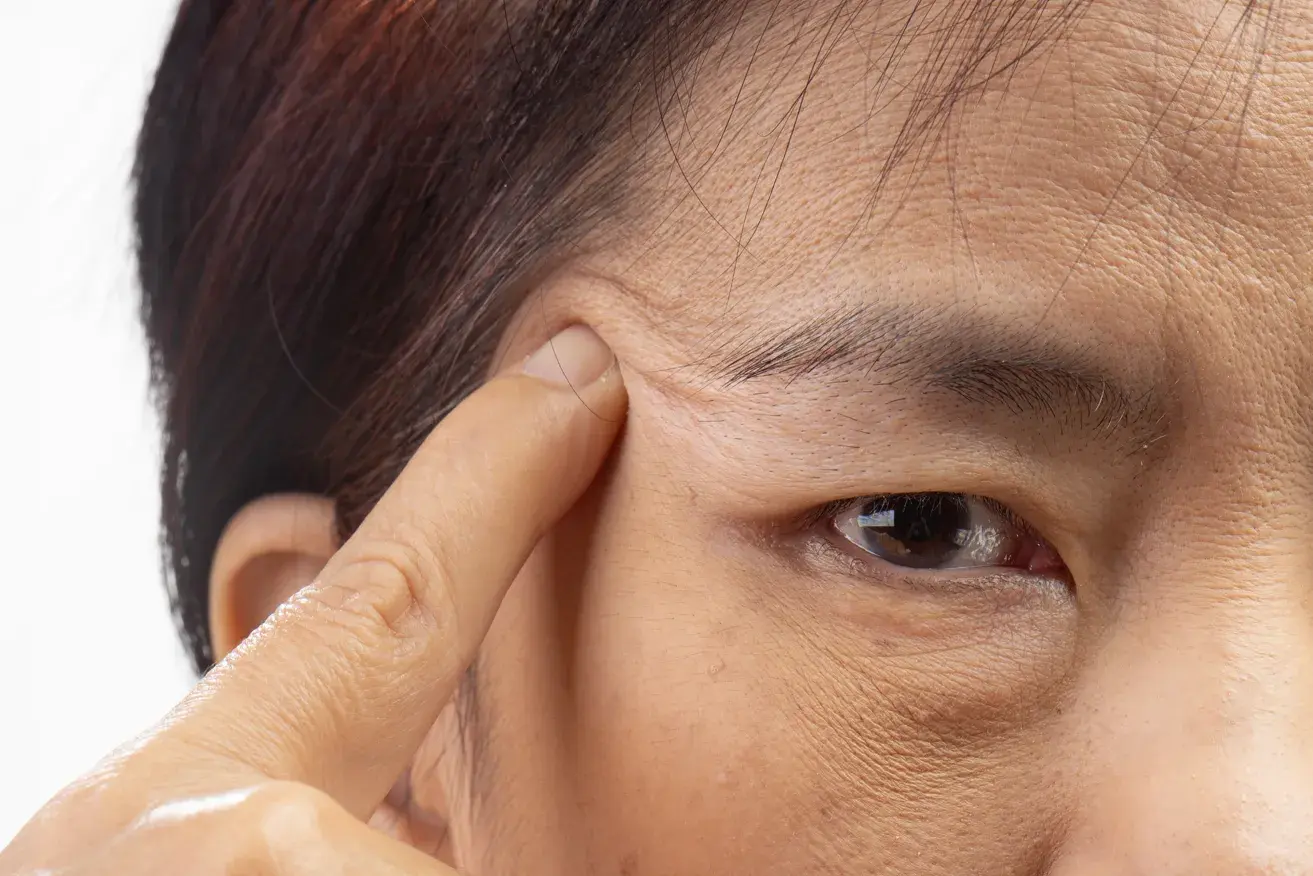
What Can Make Upper Eyelids Look Heavy or Hooded?
The area around the eyes is made up of several interconnected structures, and differences or changes in these structures can affect how much of the upper eyelid is visible. Some common contributing factors include:
- Excess or lax upper-eyelid skin: Medically known as dermatochalasis, this occurs when skin loses elasticity and begins to fold over the natural eyelid crease. Genetics can also influence eyelid anatomy, meaning some people naturally have more prominent upper-eyelid folds from a younger age.
- Changes in upper-eyelid tissue and fat: The tissues and fat around the upper eyelid can influence its contour and fullness. Changes in these structures may make the upper eyelids appear fuller or heavier.
- A lower eyebrow position: The eyebrows and upper eyelids are closely related anatomically. When the brow sits lower, more skin may gather over the upper eyelid, contributing to a hooded appearance.
- A combination of anatomical factors: Heavy-looking eyelids do not always have a single cause. Several factors can occur together, which is why two people with a similar appearance may have different underlying causes.
Is a Heavy Eyelid the Same as a Drooping Eyelid?
A hooded appearance, caused primarily by excess skin, is different from ptosis, which refers to drooping of the upper eyelid itself.
With excess skin, the skin above the eyelid crease may fold downwards while the eyelid margin remains in a relatively normal position. With ptosis, the eyelid margin itself sits lower than expected and may cover more of the eye. Ptosis can be present from birth or develop later, including as the structures responsible for lifting the eyelid change over time.
The distinction matters because treatments that address excess skin do not necessarily address problems with eyelid position or function.
Why Do My Eyelids Look Heavier as I Get Older?
Ageing can affect several structures around the eyes at the same time. The thin skin of the upper eyelids may become less elastic, while changes to connective tissues, fat and brow position can alter the contour around the eyes.
As these changes develop, the natural eyelid crease may become less visible or skin may begin to rest closer to the eyelashes. Some people may also notice differences between the two eyes becoming more apparent with age.
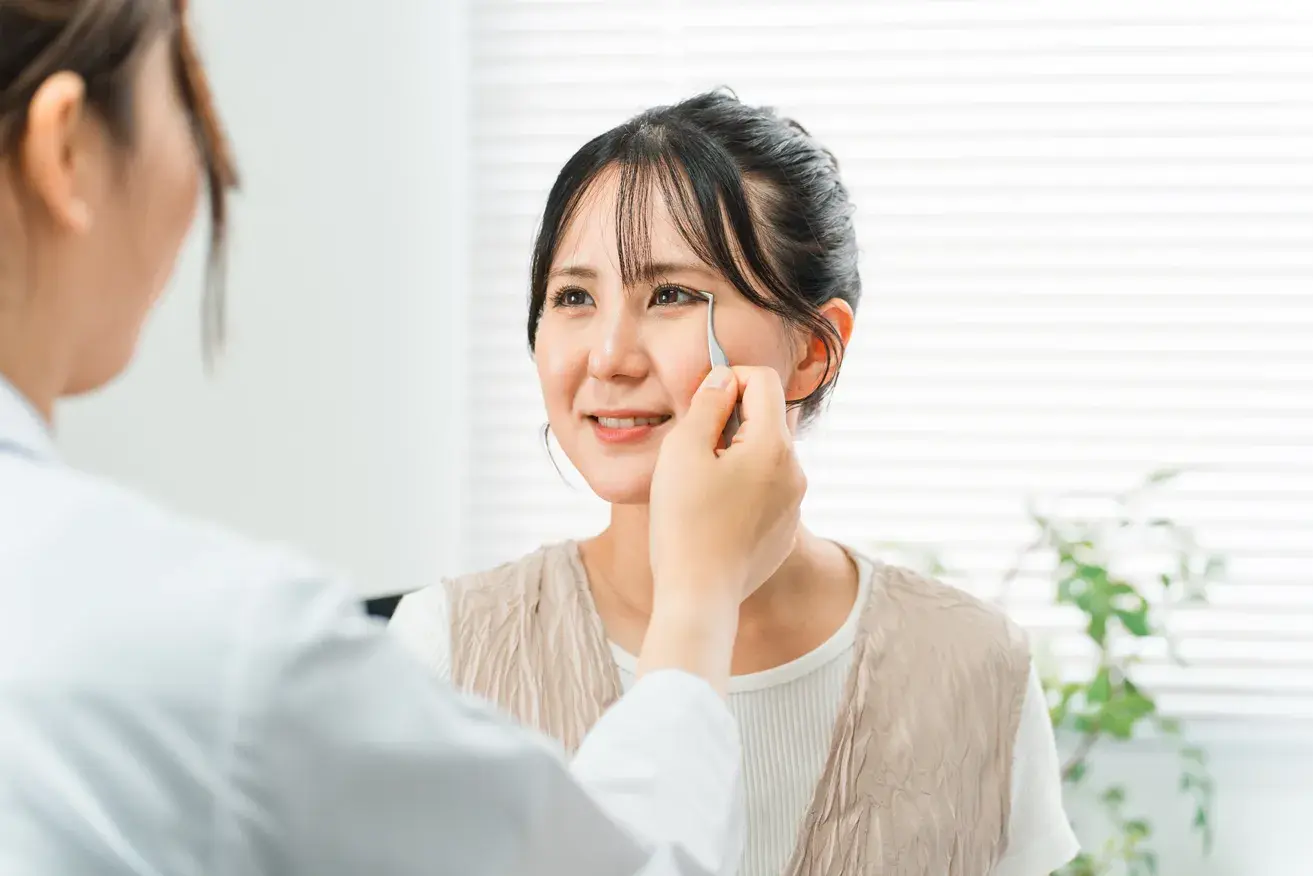
How Does a Doctor Assess Heavy or Hooded Eyelids?
An assessment looks beyond how much skin appears to be present. A doctor may examine the position of the eyelid margin, eyelid crease and eyebrows, as well as the amount and distribution of upper-eyelid skin and tissue.
Eyelid movement and the function of the muscles responsible for lifting the eyelid may also be assessed when drooping is suspected. These observations can help distinguish excess skin from ptosis, brow-related changes or a combination of factors.
This distinction is particularly important when considering eyelid surgery, as the surgical approach should be based on the patient's anatomy and the underlying cause of the heavy or hooded appearance rather than appearance alone.
When Should I Consider Having My Eyelids Assessed?
You may consider an assessment if changes to your upper eyelids are becoming increasingly noticeable, the two sides appear different or you would like to understand why your eyelids look heavier than before.
Assessment may also be appropriate if the eyelid or overlying skin begins to interfere with your field of vision. A sudden onset of eyelid drooping, particularly when accompanied by symptoms such as double vision, weakness or a severe headache, warrants prompt medical assessment because some causes can extend beyond age-related eyelid changes.
A consultation can also help you understand what changes may be achievable, how your individual anatomy may influence the approach and whether you may be a suitable candidate for surgery.
Understand Your Upper Eyelid Concerns at SW1 Plastic Surgery
If you are bothered by heavy or hooded upper eyelids, treatment options may be considered based on your anatomy and desired outcome. Depending on the underlying concern, treatment may focus on improving the upper-eyelid contour, addressing eyelid drooping or refining the eyelid crease.
At SW1 Plastic Surgery, you can consult a plastic surgeon to better understand the options that may be appropriate for you. Dr Tan Ying Chien, consultant plastic surgeon, has expertise spanning reconstructive, craniofacial and aesthetic surgery. Dr Wu Yijun, consultant plastic surgeon, is an MOH-accredited plastic surgeon with experience in reconstructive and aesthetic plastic surgery.
Together, they take a patient-centred approach that considers your individual features and expectations when planning treatment. If you would like to explore ways to address heavy or hooded upper eyelids, book an appointment with us for an assessment.
Frequently Asked Questions About Heavy and Hooded Eyelids
It depends on what is causing the appearance. Non-surgical treatments may help improve concerns such as skin texture or mild laxity around the eye area, but they generally cannot remove significant excess eyelid skin or correct a drooping eyelid.
Yes. Hooding can reduce the amount of visible eyelid space, which may cause eyeliner or eyeshadow to become less visible when the eyes are open. Makeup may also transfer onto the skin above the eyelid crease when the surfaces come into contact.
Yes. When upper-eyelid skin becomes looser or begins folding over the crease, the crease can appear less visible or defined. This may make a previously defined crease appear narrower or partially hidden, particularly when the eyes are open.
Some people become more aware of eyelid heaviness when they are tired or after prolonged visual activities. However, persistent heaviness can have different causes. If the sensation is new, worsening or accompanied by changes in vision or eyelid position, consider having it assessed by a healthcare professional.