




Prominent or uneven ears are a common concern that can affect facial balance and self-confidence. For some individuals, the ears appear to stick out more than usual, while others may notice differences in height, angle or shape between both sides. These features are often present from birth, although they can also become more noticeable with growth or minor injury over time.
Modern ear correction techniques include both non-surgical and surgical options. The most suitable approach depends on age, ear structure, and the degree of prominence or asymmetry.
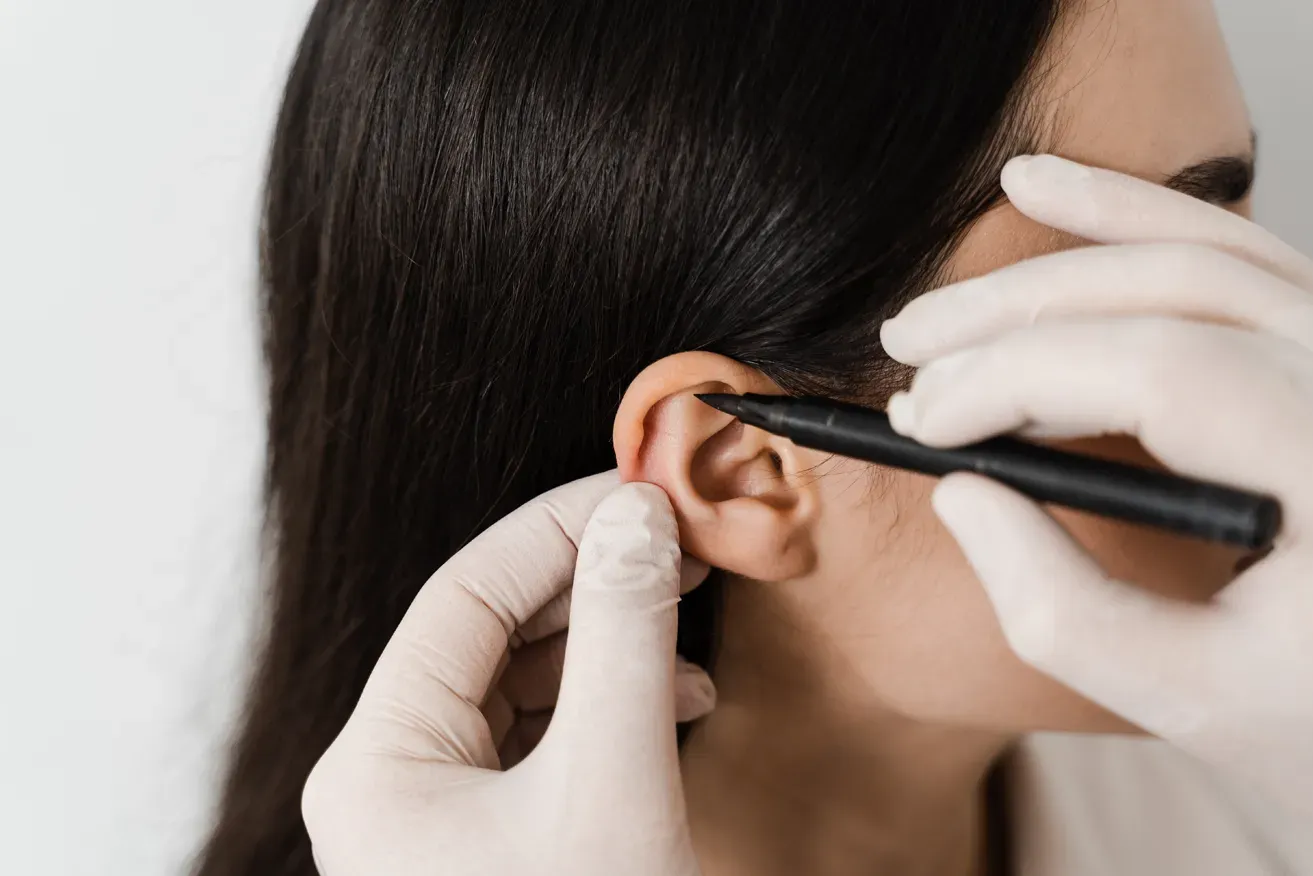
Key Takeaways
 Prominent ears are usually caused by how ear cartilage forms and folds during development
- Newborn ear moulding can correct ear shape non-surgically if started within the first few weeks
- Otoplasty is the most common long-term solution once ears are fully developed
- Treatment choice depends on age, severity, and desired level of correction
What Causes Prominent or Uneven Ears?
Ear shape is largely determined by cartilage structure, which develops early in life. While variation is normal, certain anatomical features can make the ears appear more prominent or uneven.
Common contributing factors include:
- Cartilage Development Differences: If the folds of the ear do not form fully, the ear may project outward more than usual
- Enlarged Inner Ear Bowl: A deeper conchal structure can push the ear away from the head
- Asymmetry Between Ears: One ear may sit higher, tilt differently or have a slightly altered shape compared to the other
- Trauma or Previous Injury: Physical impact can change cartilage contour and lead to irregular positioning
These variations are typically harmless, but they may prompt individuals to explore corrective options for aesthetic balance.
Non-Surgical Treatment for Early Ear Deformities
In newborns, ear cartilage is soft and highly mouldable. This allows early correction without surgery in selected cases when treated promptly.
Ear moulding is a non-invasive option that:
- Uses a gentle external device to reshape the ear over time
- Is most effective within the first few weeks after birth, when cartilage is most flexible
- Helps guide the ear towards a more natural contour as it develops
- Requires early intervention, as cartilage stiffens quickly with age
Surgical Options for Ear Correction
When the cartilage has fully developed, surgical correction is typically used by a Cosmetic surgeon to adjust position, contour or symmetry more permanently. The approach recommended depends on the degree of prominence, ear structure and desired aesthetic outcome.

Traditional Otoplasty (Ear Pinning)
This is the most established method for correcting prominent ears. A small incision is made behind the ear to reshape or reposition cartilage. The ear is then brought closer to the head for a more balanced appearance. The procedure usually takes one to two hours and is performed under local or general anaesthesia. Any scar is typically hidden within the natural crease behind the ear.
Incisionless Otoplasty
This technique avoids a formal incision. Instead, fine sutures are placed through tiny entry points to reshape and support the cartilage. It is generally suited for milder prominence and may involve less downtime, with no visible surgical scar.
Cartilage Scoring or Modification Techniques
In some cases, the cartilage may need to be carefully adjusted to achieve the desired fold and contour. This can involve controlled weakening or precise reshaping of the cartilage structure, allowing it to be positioned more naturally against the head.
Which Ear Correction Option Is Right for You?
Treatment depends on age, cartilage flexibility, and how noticeable the concern is:
- Newborns (first few weeks): Ear moulding is often effective because cartilage is still soft
- Children and adults: Surgical options are typically required for lasting correction
- Mild prominence: Incisionless techniques may be suitable
- More noticeable asymmetry or projection: Traditional otoplasty or cartilage reshaping may provide more predictable results
A consultation helps determine which approach aligns with your anatomy and goals.
Recovery and What to Expect
Recovery varies by technique, but most patients follow a straightforward healing process with gradual improvement.
Typical points include:
- Mild swelling or tightness in the early phase
- Temporary sensitivity around the treated area
- Use of protective dressing or head support
- Return to light activities within several days for many patients
- Progressive refinement of ear shape as swelling subsides
Final results become more defined as healing continues over several weeks.
When Should You Consider Ear Correction?
Ear correction may be considered when ear appearance affects facial balance or personal confidence. A consultation helps determine whether treatment is appropriate and what outcomes are realistic.
You may consider treatment if:
- Ear projection appears disproportionate to facial features
- One ear differs noticeably from the other
- You feel self-conscious about ear appearance
- You are seeking a more balanced overall profile
Explore Ear Correction Options with SW1 Plastic Surgery
Prominent or uneven ears can often be improved with carefully planned treatment tailored to your facial features and goals. Whether the concern is projection, imbalance or contour irregularity, understanding your options is the first step towards making a confident decision.
At SW1 Plastic Surgery, Dr Tan Ying Chien and Dr Wu Yijun offer careful evaluation and personalised guidance to help you understand suitable options and expected outcomes. If you are considering correction for prominent or uneven ears, arrange a consultation with us to clarify suitable options and expected outcomes.
Frequently Asked Questions (FAQs) About Prominent Ears
Ear surgery is typically recommended when ear prominence or asymmetry is clearly noticeable and does not improve with growth. It is most commonly considered after the ears have reached near full development (usually around age 5 to 6 and above). Adults may also choose surgery if ear shape affects facial balance or confidence. A consultation helps determine whether the degree of prominence and cartilage structure are suitable for surgical correction.
Ear asymmetry usually does not affect hearing. Hearing function depends on the ear canal, eardrum, and inner ear structures rather than the outer ear shape. In most cases, uneven ears are purely a cosmetic concern unless there is an associated structural issue involving the ear canal.
Scars from ear correction surgery are usually minimal and well hidden. In most cases, incisions are placed behind the ear within the natural crease, making them difficult to see once healed. Scars typically fade over time, although visibility can vary depending on individual healing and skin type.
Results from ear correction surgery are generally long-lasting. In most cases, the ears maintain their new position once healing is complete. However, rare cases of partial recurrence can occur if the cartilage gradually shifts or if healing forces pull the ear outward. Proper surgical technique and post-procedure care help minimise this risk.